
🤿 This is part of the illustrated series “Algorithms with cards”, you can find the first article here where we talk about bubble sort.
The binary search algorithm, or “Binary Search”, is an efficient method for finding an element in an ordered list. The idea is to divide the search range in half over and over, always keeping the half where the searched element must be. That way we make far fewer comparisons than checking element by element, and the difference really shows in large lists.
The binary search algorithm
Start
  Deck of cards = [Ordered, Ace♥, 2♥, 3♥, 4♥, 5♥, ... King♥]
  Card searched = 6♥

  Step 1:
    Set two limits, 'start' at the first card and 'end' at the last card:
      Start = position of Ace♥
      End = position of King♥

  Step 2:
    Find the position of the card in the middle of the 'start' and 'end' limits.
    If the card at this middle position is the 'Card searched':
      Success! You found the card. Indicate the position of this card and proceed to End.

    Step 3:
      If the card at the middle position has a value less than the 'Card searched':
        Adjust the 'start' limit to start just after the middle card:
          Start = After the middle card
        Return to Step 2.

    Step 4:
      If the card at the middle position has a value greater than the 'Card searched':
        Adjust the 'end' limit to end just before the middle card:
          End = Before the middle card
        Return to Step 2.

End
At the end, you should have the card you were looking for in the deck of cards.
A step-by-step example of binary search
To illustrate how the binary search algorithm works, let’s perform a step-by-step example with a deck of cards.
Following the described process, we’ll see how we find the searched card, 6 of hearts, making the search set smaller each time.
🃏 Remember that for binary search to work the set of elements has to be ordered from the beginning. But, this is not a requirement for all search algorithms, like linear search for example.
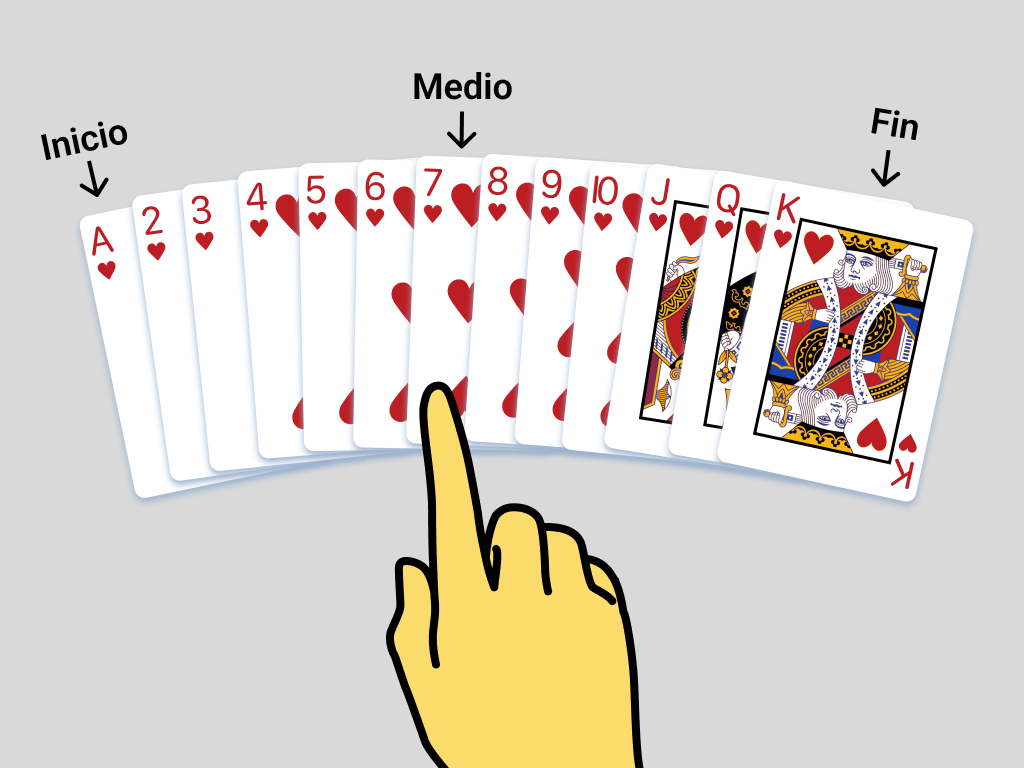 Figure 1: Hand pointing to the middle (Seven of hearts) of an ordered deck of cards.
We define the limits, the first card will be the Start, the last one the End, and finally the middle card will be the one we’ll verify as the card we’re looking for.
Figure 1: Hand pointing to the middle (Seven of hearts) of an ordered deck of cards.
We define the limits, the first card will be the Start, the last one the End, and finally the middle card will be the one we’ll verify as the card we’re looking for.
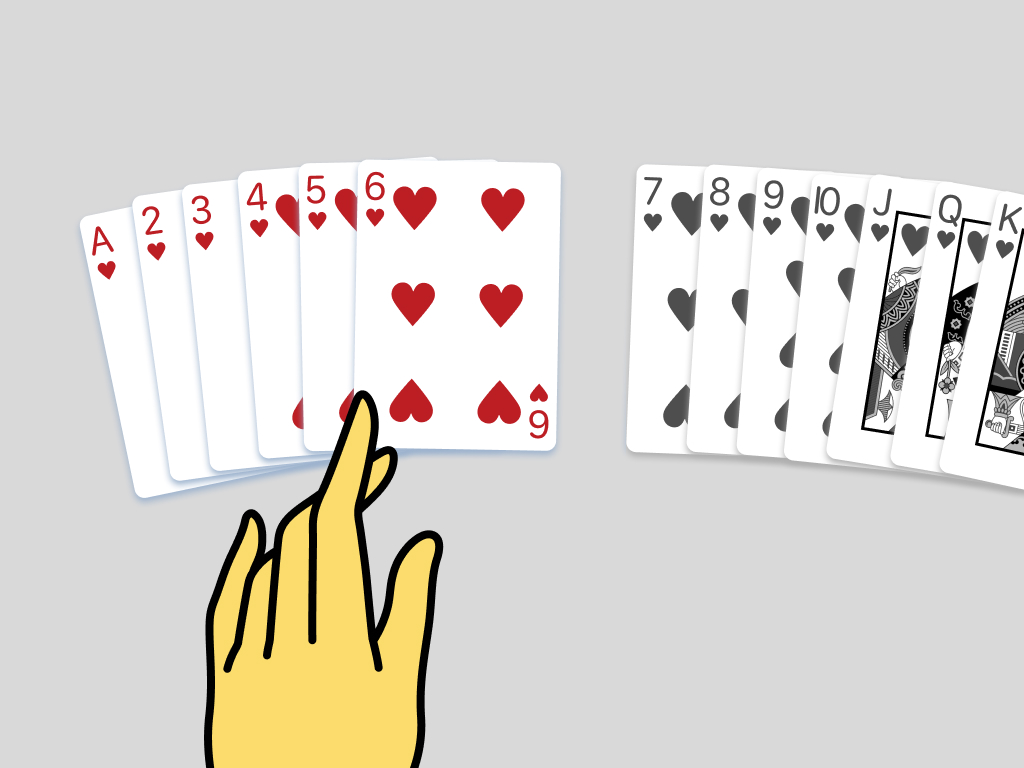 Figure 2: Deck of cards divided in the middle, discarding the right section.
Since the middle card was the seven of hearts, having a greater value, we’ll discard the entire right half.
Figure 2: Deck of cards divided in the middle, discarding the right section.
Since the middle card was the seven of hearts, having a greater value, we’ll discard the entire right half.
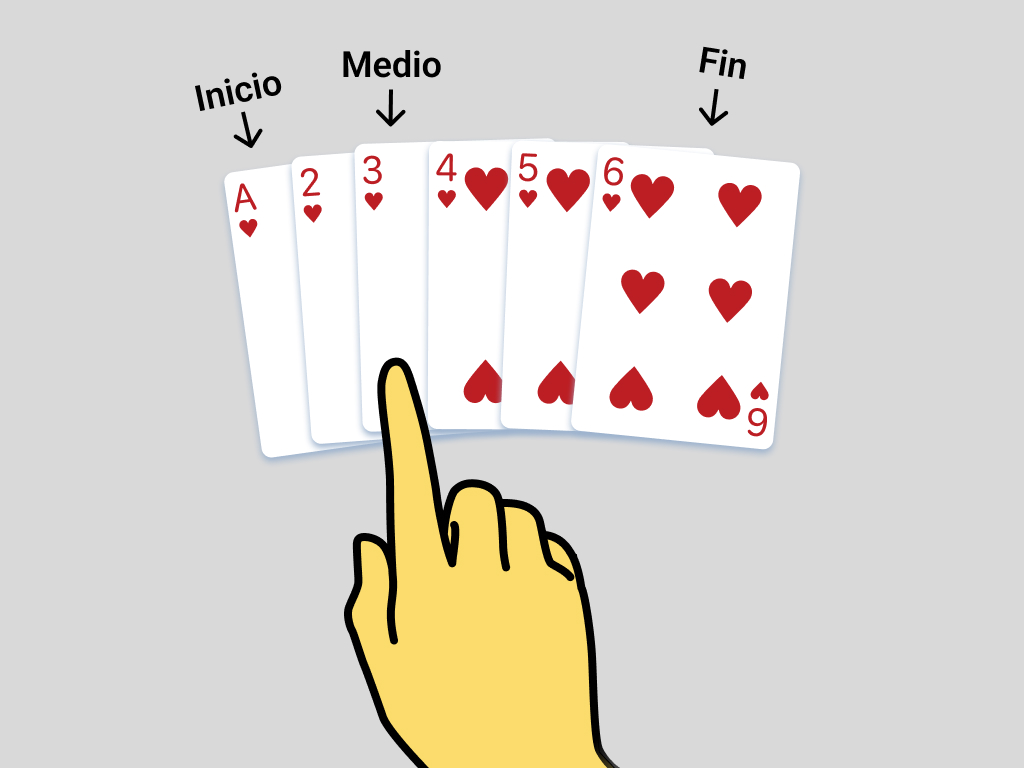 Figure 3: Hand pointing to the middle (Three of hearts) of the previous left section.
We’ll establish the limits again, this time the end becomes six of hearts, and again we’ll look for the middle card.
Figure 3: Hand pointing to the middle (Three of hearts) of the previous left section.
We’ll establish the limits again, this time the end becomes six of hearts, and again we’ll look for the middle card.
🃏 When we had 13 cards in total, to find the middle card we divided 13 by 2. The result gives us 6.5, but since card 6.5 doesn’t exist as we’re working with integer values, we must decide whether to round down or up. For this occasion we decided to always round up and that’s why we took the 7 of hearts.
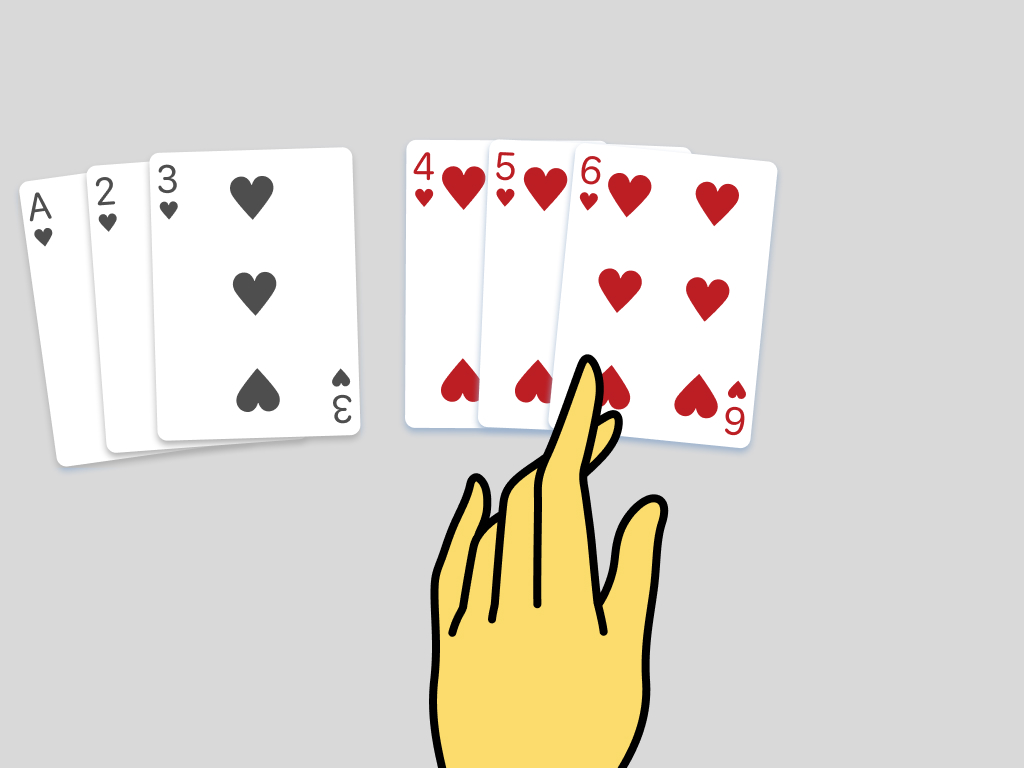 Figure 4: Deck of cards divided in the middle, discarding the previous right section.
The middle card is the 3 of hearts, since this is less than the searched card, we’ll discard the entire left half.
Figure 4: Deck of cards divided in the middle, discarding the previous right section.
The middle card is the 3 of hearts, since this is less than the searched card, we’ll discard the entire left half.
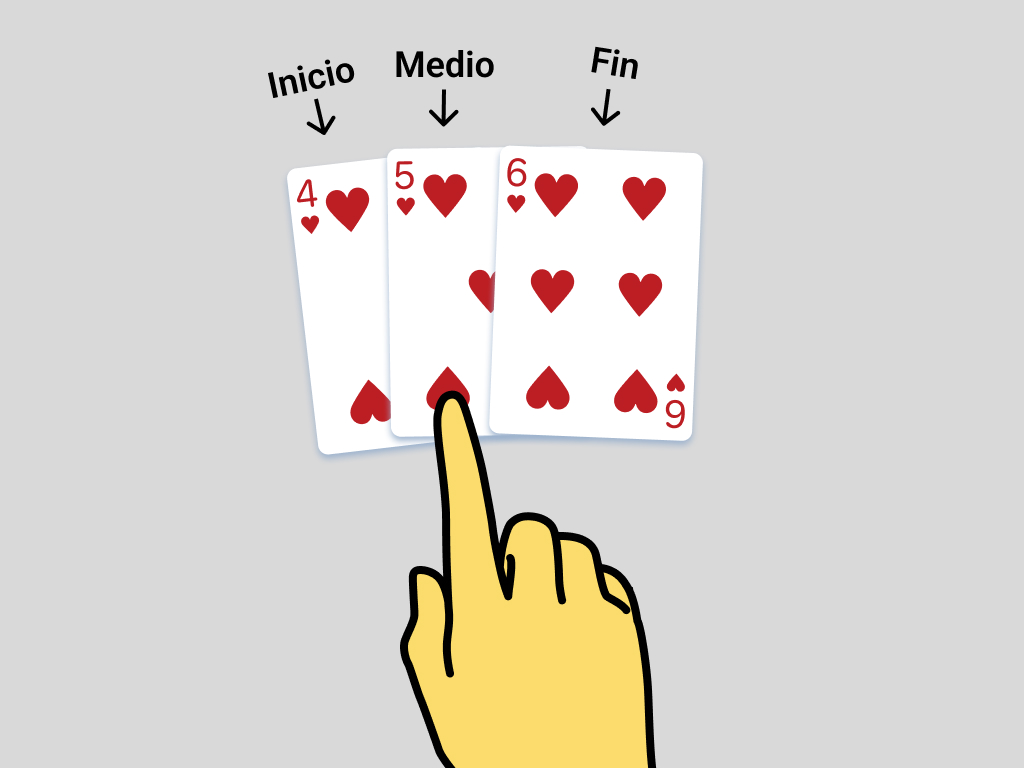 Figure 5: Hand pointing to the middle (Five of hearts) of the previous right section.
We establish the limits again, the end stays the same but the start becomes the new first card, in this case the 4 of hearts.
Figure 5: Hand pointing to the middle (Five of hearts) of the previous right section.
We establish the limits again, the end stays the same but the start becomes the new first card, in this case the 4 of hearts.
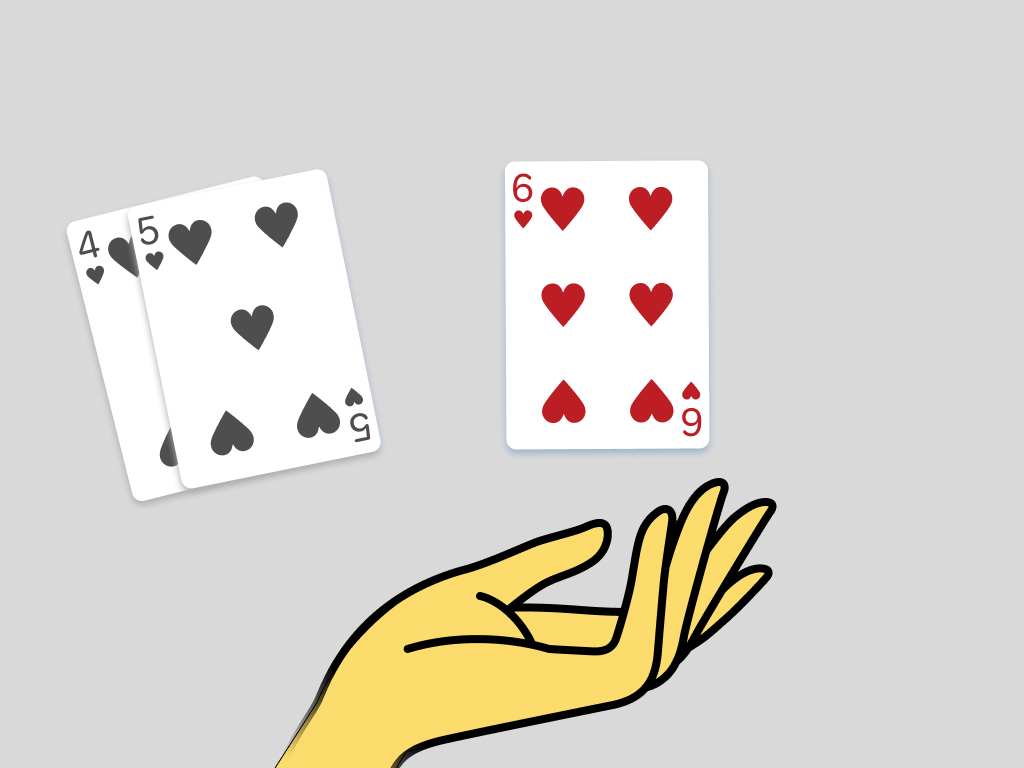 Figure 6: Hand showing the found card, Six of hearts.
Finally, the middle card will be less than the searched card, we discard the entire left half again.
Figure 6: Hand showing the found card, Six of hearts.
Finally, the middle card will be less than the searched card, we discard the entire left half again.
Since this time only one card remains, we only need to ask if that card is the 6 of hearts, and indeed it is!
Why do we need algorithms?
We can find a card at a glance, but a computer needs us to break the process down into precise, repeatable steps, which is exactly what an algorithm does. The same principle we applied with the deck is what a spreadsheet uses to sort data, or a server to search among millions of records. That’s why I like practicing with cards: if you understand how the search works with 13 cards in your hand, you’ve already understood how it works in much bigger contexts.